
The 2026 Shopper’s Handbook: Mastering Coupon Stacking and Promotional Codes for Maximum Value
Welcome to the future of smart shopping! As we navigate further into 2026, the landscape of retail continues to evolve, bringing with it new opportunities for savvy consumers to save more than ever before. Gone are the days when a single coupon was your only tool for discounts. Today, the art of coupon stacking guide has become a crucial skill for maximizing your purchasing power. This comprehensive handbook will equip you with the knowledge and strategies to master promotional codes and coupon stacking, transforming you into a true savings expert.
In an economy where every dollar counts, understanding how to effectively combine discounts can lead to significant savings on everything from groceries and apparel to electronics and travel. This guide isn’t just about finding coupons; it’s about strategically applying them to achieve the lowest possible price, often far below the advertised sale price. We’ll delve into the intricacies of various discount types, explore the best platforms for finding deals, and uncover advanced techniques that even seasoned shoppers might overlook. Prepare to revolutionize your shopping habits and keep more money in your pocket!
Understanding the Basics: What is Coupon Stacking?
At its core, coupon stacking involves using more than one discount on a single item or transaction. While this might sound straightforward, the rules and possibilities vary widely depending on the retailer, the type of coupon, and even the specific product. For many years, retailers had strict ‘one coupon per item’ policies. However, with the rise of digital commerce and increased competition, many stores have adapted their policies, making coupon stacking a legitimate and encouraged practice for attracting and retaining customers.
The most common forms of coupon stacking involve combining a manufacturer’s coupon with a store coupon. A manufacturer’s coupon is issued by the product’s producer (e.g., Procter & Gamble, General Mills) and is generally accepted at any retailer that carries the product. A store coupon, on the other hand, is issued by the retailer itself (e.g., Target, CVS) and is only valid at that specific store. When a store allows you to use both a manufacturer’s coupon and a store coupon on the same item, you are successfully engaging in coupon stacking guide.
Beyond this basic combination, advanced coupon stacking can also involve combining these coupons with loyalty program discounts, cash-back apps, credit card rewards, and even sale prices. The goal is always to layer as many valid discounts as possible to drive down the final cost. It requires a keen eye for detail, an understanding of store policies, and a bit of strategic planning, but the rewards are well worth the effort.
The Evolution of Promotional Codes and Digital Coupons in 2026
The digital revolution has profoundly reshaped the world of discounts. In 2026, physical newspaper inserts are still around, but digital promotional codes and coupons dominate the landscape. Websites, apps, email newsletters, and even social media are now primary sources for finding incredible deals. This shift has made coupon stacking guide more accessible, as digital platforms often automate the application of multiple discounts.
Key Digital Discount Types:
- Digital Manufacturer Coupons: These are often found directly on brand websites or through apps like Coupons.com. They function identically to their paper counterparts but are loaded directly to your loyalty card or applied at checkout with a code.
- Digital Store Coupons: Retailer-specific apps and websites are goldmines for these. They can be percentage-off (e.g., 20% off your entire order), dollar-off (e.g., $5 off a $30 purchase), or specific product discounts.
- Promotional Codes (Promo Codes): These alphanumeric codes are typically entered at online checkout. They can offer a fixed discount, a percentage off, free shipping, or even a free item with purchase. Many retailers allow promo codes to be combined with digital coupons if the codes themselves aren’t explicitly tied to a specific coupon.
- Cash-Back Apps and Browser Extensions: Services like Rakuten, Ibotta, and Honey have become indispensable tools. They offer cash back on purchases or automatically apply the best available promo codes at checkout. While not strictly ‘coupon stacking,’ they add another layer of savings that can be combined with traditional coupons.
- Loyalty Program Rewards: Many stores offer points, exclusive discounts, or free items to loyal customers. These rewards can often be redeemed in conjunction with other coupons, further enhancing your savings.
Staying updated on these digital avenues is paramount for any aspiring coupon stacking master. Subscribing to email lists of your favorite stores, downloading their apps, and following deal aggregators will ensure you never miss out on potential savings.
Mastering the Art of the Coupon Stacking Guide: Step-by-Step Strategies
Step 1: Know Your Store Policies
This is arguably the most critical step. Every retailer has a unique coupon policy, and understanding it is the foundation of successful coupon stacking guide. Before you even start collecting coupons, visit your preferred stores’ websites and locate their coupon policy. Pay close attention to:
- Manufacturer vs. Store Coupons: Do they allow one of each per item?
- Digital vs. Paper: Can digital coupons be combined with paper ones?
- Exclusions: Are there specific brands or categories excluded from certain discounts?
- Overage: What happens if a coupon’s value exceeds the item’s price (e.g., do they give you cash back, or does the coupon adjust to the item’s price)?
- Competitor Coupons: Do they accept coupons from other stores?
- Number of Coupons: Is there a limit on how many coupons can be used per transaction?
Print out these policies or save them on your phone. If a cashier is unsure, you can politely refer to the store’s official policy.
Step 2: Identify Sales and Clearance Items
The biggest savings come from combining coupons with already discounted items. A 50-cent coupon on a full-price item is good, but a 50-cent coupon on an item already 75% off is phenomenal. Always look for:
- Weekly Sales Flyers: These are your primary source for understanding what’s on sale.
- Clearance Racks/Sections: These hidden gems often yield the best deals, especially when combined with coupons.
- Price Matching: Some stores will match competitor prices, allowing you to then apply coupons on top of the matched price.
Step 3: Hunt for Coupons and Promotional Codes
This is where the real detective work begins. A successful coupon stacking guide relies on a diverse arsenal of discounts. Here’s where to look in 2026:
- Manufacturer Websites: Many brands offer printable coupons directly on their sites.
- Coupon Websites & Apps: Sites like Coupons.com, RetailMeNot, and the apps for your favorite grocery stores are essential.
- Email Newsletters: Sign up for every retailer’s email list you shop at. They often send exclusive promo codes and early access to sales.
- Social Media: Follow brands and deal bloggers on platforms like Facebook, Instagram, and X (formerly Twitter) for flash sales and unique codes.
- Browser Extensions: Tools like Honey, Capital One Shopping, and Rakuten automatically find and apply promo codes at checkout.
- Sunday Newspaper Inserts: While less dominant, they still exist and can contain high-value manufacturer coupons.
- In-Store Flyers & Kiosks: Don’t overlook physical sources within the store itself.
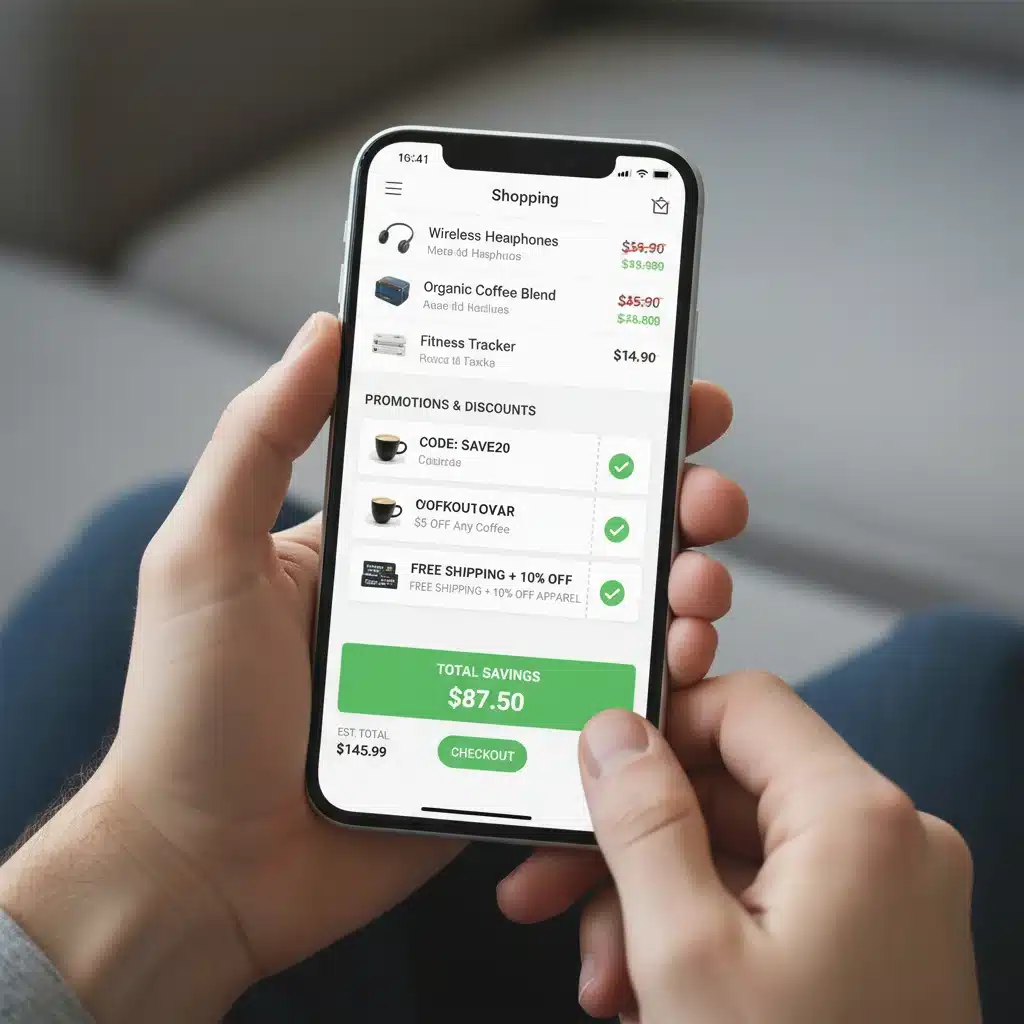
Step 4: Organize Your Finds
Whether you prefer a physical binder or a digital folder, organization is key. Categorize your coupons by store, expiration date, or product type. For digital codes, create a spreadsheet or use a dedicated app to keep track of their validity and usage. This prevents expired coupons and ensures you can quickly find what you need at checkout.
Step 5: Plan Your Shopping Trip (or Online Order)
Never shop without a plan. Create a shopping list and, for each item, identify which coupons and promo codes you can apply. Calculate your potential savings beforehand. This not only ensures you get the best deal but also helps prevent impulse purchases. For online shopping, have all your codes ready to paste.
Step 6: Execute Your Stacking Strategy
At the checkout, whether online or in-store, methodically apply your discounts. Start with store coupons, then manufacturer coupons, and finally, any loyalty program rewards or cash-back offers. For online purchases, carefully enter each promotional code. Double-check that all discounts have been applied before finalizing your purchase.
Advanced Coupon Stacking Techniques for 2026
The ‘BOGO’ Bonanza with Coupons
Buy One Get One (BOGO) offers are fantastic on their own, but they become extraordinary when you can apply coupons. If a store allows it, you might be able to use two manufacturer coupons on a BOGO deal (one for the item you’re buying, and one for the ‘free’ item, as technically you are still receiving two items). Always check the store’s policy carefully, as this is where rules can get tricky.
Stacking with Cash-Back Apps and Credit Card Rewards
This is where the savings truly multiply. After applying your coupons, use a credit card that offers cash back or rewards points for your purchase. Then, submit your receipt to cash-back apps like Ibotta or Fetch Rewards. These apps often provide rebates on specific items, and these rebates are typically stackable with all other coupons and discounts you’ve used.
Understanding Catalina Coupons and Register Rewards
These are coupons that print out at the register after your purchase, often based on what you bought. They can be manufacturer or store coupons and are excellent for future coupon stacking guide opportunities. Pay attention to the triggers for these coupons and plan your next shopping trip around them.
The Art of ‘Rolling’ Rewards
Some drugstores and grocery chains offer store-specific rewards that can be used like cash on future purchases (e.g., ExtraBucks at CVS, Register Rewards at Walgreens). Savvy shoppers ‘roll’ these rewards by using them to pay for a transaction that will generate new rewards, effectively reducing their out-of-pocket expense to almost zero over time. This is a high-level coupon stacking guide strategy that requires meticulous planning.
Common Pitfalls and How to Avoid Them
While coupon stacking offers incredible potential, there are a few common mistakes that can derail your efforts. Being aware of these can save you time, frustration, and even money.
1. Expired Coupons
Always check expiration dates! A coupon, no matter how valuable, is useless if it’s expired. This is why good organization is so crucial.
2. Misunderstanding Store Policies
Trying to stack coupons in a way that violates a store’s explicit policy can lead to embarrassment at the checkout. Do your homework beforehand.
3. Forgetting to Apply All Discounts
Especially with online shopping, it’s easy to overlook a promo code or forget to click ‘apply’ for a digital coupon. Always review your cart thoroughly before payment.
4. Buying Unnecessary Items
Don’t fall into the trap of buying something just because you have a great coupon for it. If you don’t need it, it’s not a saving; it’s an expense. Focus on items you genuinely use and need.
5. Coupon Fraud and Misuse
Never photocopy coupons or attempt to use them for items they weren’t intended for. This is unethical and can lead to coupons being pulled by manufacturers or stores refusing to accept them in the future.
The Future of Coupon Stacking: What to Expect in 2026 and Beyond
The world of discounts is dynamic. As technology advances, so too will the methods of saving. In 2026, we can anticipate a few trends:
- Personalized Offers: AI-driven algorithms will likely offer even more personalized coupons based on your shopping history and preferences, making targeted coupon stacking guide easier.
- Augmented Reality (AR) Shopping: Imagine walking through a store and seeing digital coupons pop up over items through your AR glasses or phone, guiding you to the best deals in real-time.
- Blockchain for Coupons: While still nascent, blockchain technology could be used to create more secure, trackable, and fraud-resistant digital coupons, potentially standardizing stacking rules across platforms.
- Subscription Box Integration: Expect more opportunities to apply promotional codes and coupons to curated subscription boxes, extending savings beyond traditional retail.
Staying agile and adapting to these changes will be key to remaining a master of savings. Regularly check tech news and retail blogs to keep abreast of innovations in the discount space.

Real-World Examples of Successful Coupon Stacking
To truly understand the power of a strategic coupon stacking guide, let’s look at a few hypothetical scenarios:
Scenario 1: Grocery Haul
Imagine you need laundry detergent. It’s on sale at your local grocery store for $5.99 (regularly $8.99). You have a digital manufacturer coupon for $2.00 off. Your store app also has a digital store coupon for $1.00 off any laundry product this week. Additionally, you’re using a cash-back app that offers $0.75 back on that specific brand of detergent. If the store allows it, you could:
- Start with the sale price: $5.99
- Apply the $2.00 manufacturer coupon: $3.99
- Apply the $1.00 store coupon: $2.99
- Get $0.75 back from the cash-back app: Final Cost: $2.24 (from an original $8.99, a saving of 75%!)
Scenario 2: Online Apparel Purchase
You’re buying a new shirt online for $40. The website has a sitewide sale of 20% off. You also found a promotional code for $10 off orders over $30. Your browser extension automatically applies a free shipping code, and you’re paying with a credit card that gives 5% cash back on online apparel purchases.
- Original price: $40.00
- Apply 20% sitewide sale: $40.00 * 0.80 = $32.00
- Apply $10 promo code: $32.00 – $10.00 = $22.00
- Free shipping applied automatically (saves $7.00): Total out-of-pocket: $22.00
- 5% cash back on $22.00: $1.10 back
- Final Effective Cost: $20.90 (plus the $7 shipping saved, a total value of $28.10 in savings!)
These examples illustrate the profound impact that a well-executed coupon stacking guide strategy can have on your budget. It’s not just about saving a few cents; it’s about making your money work harder for you.
Building Your Personal Coupon Stacking Toolkit for 2026
To become a truly effective coupon stacker, you’ll need more than just knowledge; you’ll need the right tools. Here’s a checklist for your 2026 coupon stacking arsenal:
- Smartphone with Retailer Apps: Essential for digital coupons, loyalty programs, and scanning product barcodes for deals.
- Dedicated Email Address: Use one specifically for retailer newsletters to keep your primary inbox uncluttered.
- Browser Extensions: Honey, Rakuten, Capital One Shopping, and similar tools are passive savers that work in the background.
- Cash-Back Apps: Ibotta, Fetch Rewards, Checkout 51 are excellent for post-purchase rebates.
- Coupon Aggregator Websites: RetailMeNot, Coupons.com, and other deal sites are great for finding codes.
- Physical Coupon Organizer (Optional): For those who still use paper coupons, a small accordion folder or binder is invaluable.
- Store Loyalty Cards: Sign up for every store you frequent to unlock exclusive discounts and rewards.
- Budgeting App/Spreadsheet: To track your savings and ensure you’re sticking to your financial goals.
- A Printer: For printing online manufacturer coupons when needed.
Equipping yourself with these tools will streamline your coupon stacking process, making it less of a chore and more of a rewarding financial game.
The Ethical Dimension of Coupon Stacking
While the goal is to save money, it’s crucial to always operate within ethical boundaries. Coupon fraud, such as using expired coupons, attempting to use counterfeit coupons, or trying to use a coupon on an item it’s not intended for, harms both retailers and manufacturers. This leads to stricter policies and makes it harder for legitimate couponers to save. Always adhere to the stated terms and conditions of coupons and store policies.
If a cashier questions a coupon, remain polite and refer to the store’s official policy. Most stores are happy to honor valid coupons, and a positive attitude goes a long way. Remember, you’re building a relationship with the store and its employees, and mutual respect ensures a pleasant shopping experience for everyone.
Conclusion: Become a 2026 Savings Champion
The 2026 Shopper’s Handbook has provided you with a comprehensive coupon stacking guide, demystifying the process of combining discounts and leveraging promotional codes. From understanding basic store policies to mastering advanced techniques like ‘rolling’ rewards and utilizing cash-back apps, you now have the knowledge to significantly reduce your household expenses.
The retail landscape will continue to evolve, but the core principles of smart shopping remain constant: research, organization, and strategic application. By consistently applying the strategies outlined in this guide, you will not only save money but also gain a profound sense of financial empowerment. Embrace the challenge, enjoy the process, and become the savings champion you were meant to be in 2026 and beyond!
Start your journey today. Collect those coupons, find those promo codes, and stack your way to unparalleled savings. Happy shopping!